
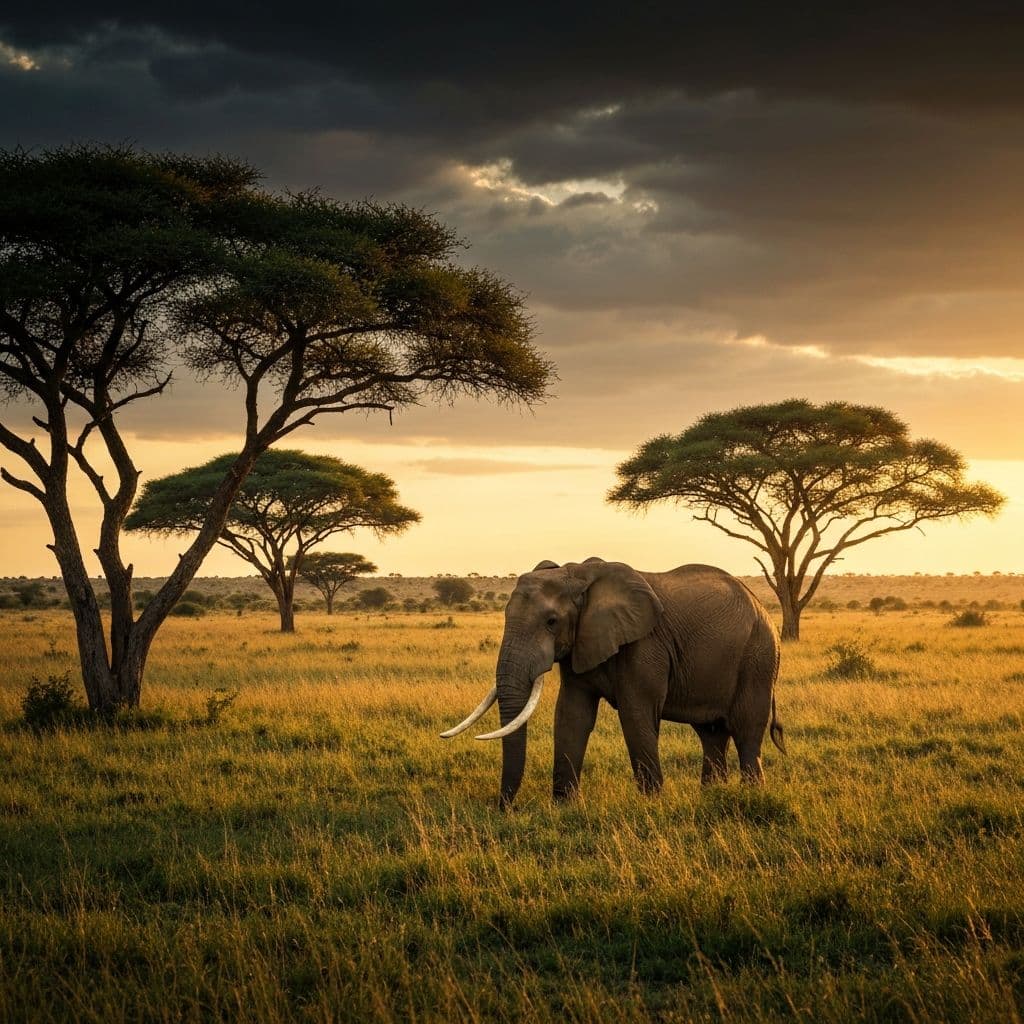
The Ultimate Add-On
Kruger National Park is one of the largest game reserves in Africa, home to the Big Five and hundreds of other species. It sits approximately 4-5 hours from Johannesburg by road — close enough to combine with Cricket World Cup 2027 matches.
For many international visitors, a safari is the reason to choose South Africa over other destinations. The World Cup provides the occasion; Kruger provides the experience of a lifetime.
Logistics from Johannesburg
If attending matches at the Wanderers in Johannesburg, Kruger is highly accessible:
By road — 4-5 hours via the N4 and N12. The drive is straightforward, and a rental car offers flexibility for self-drive safaris.
By air — Daily flights from OR Tambo to Kruger Mpumalanga International Airport (KMIA) or Hoedspruit. Flight time is approximately 1 hour.
By transfer — Private lodges typically offer transfer services from Johannesburg, either by road or air.
Most visitors fly in and out, maximising time in the park. If you have a match on Saturday and another on Wednesday, three full days of safari fit comfortably between.
What Three Days Looks Like
Safari days start early. A typical schedule:
Day 1
Day 2
Day 3
This schedule allows you to see the park properly while returning to Johannesburg in time for evening activities or an early night before a match.
Where to Stay
Kruger accommodation ranges from national park rest camps to ultra-luxury private reserves:
National Park Camps — Affordable, authentic, self-catering options within the park boundaries. Skukuza and Satara are the most popular.
Private Reserves — Sabi Sands, Timbavati, and others border Kruger with no fences between. These offer all-inclusive luxury with expert guides and exclusive traversing rights.
Budget: R1,500-3,000/night (park camps)
Mid-range: R5,000-10,000/night (quality lodges)
Luxury: R15,000-50,000/night (Singita, &Beyond, etc.)
For a once-in-a-lifetime trip, the private reserves justify the investment. The guiding quality and exclusivity transform the experience.
What You Will See
October-November is late dry season — excellent for wildlife viewing. Animals congregate around water sources, vegetation is sparse, and sightings are frequent.
The Big Five (lion, leopard, elephant, rhino, buffalo) are all present, along with:
Most visitors see lions within the first 24 hours. Leopard requires patience and luck. The experience goes far beyond ticking species — it is the immersion in wild Africa that stays with you.
Combining with Cricket
A sample World Cup itinerary with safari:
This rhythm — cricket, safari, cricket — captures the essence of what makes this World Cup unique.
Booking
Safari lodges book out 6-12 months in advance for peak season. With the World Cup driving demand, expect even earlier sell-outs.
Start your planning:
The combination of world-class cricket and African safari is available nowhere else. Make it happen.