
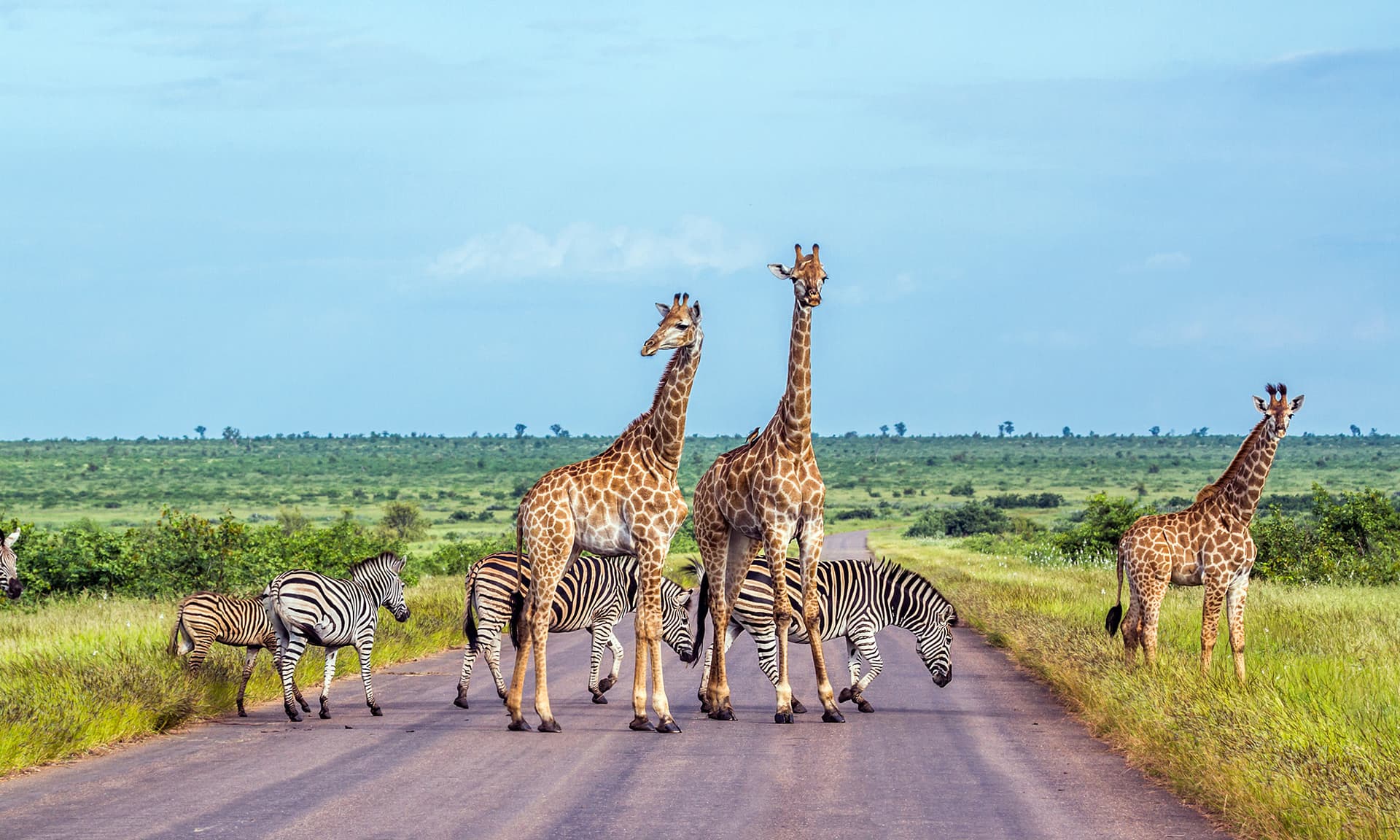
Kruger National Park
Africa's most celebrated and accessible game reserve. 19,485 km² of wilderness, 147 mammal species, and over 90 years of conservation history.
History of Kruger National Park
Kruger National Park has its origins in the Sabi Game Reserve, proclaimed in 1898 by President Paul Kruger of the South African Republic as a protected area between the Sabie and Crocodile rivers. James Stevenson-Hamilton was appointed the first warden in 1902 and would remain in the role for 44 years, during which time he transformed the reserve from a modest sanctuary into one of Africa's great wildlife refuges.
The Sabi Game Reserve was officially proclaimed Kruger National Park in 1926 under the National Parks Act, named in honour of Paul Kruger. The park was subsequently expanded northward to its present 350 km length, incorporating the Shingwedzi and Letaba regions, and the concept of public access by motor vehicle was introduced — a revolutionary approach that established the model for game reserves worldwide.
Today Kruger National Park covers 19,485 km² — an area slightly larger than Wales — spanning the provinces of Limpopo and Mpumalanga. Its western boundary adjoins a string of private game reserves, including the famous Sabi Sand, Timbavati and Klaserie, from which fences were removed from the late 1980s onwards, effectively extending the greater ecosystem to over 22,000 km².
The park supports 147 mammal species, 507 bird species, 114 reptile species, 49 fish species and 34 amphibian species. Over 1,700 plant species occur within its boundaries. Annual visitor numbers exceed 1.5 million, making it one of Africa's most visited wildlife areas.
Wildlife in Kruger
Lion
Approx. 1,600–2,000Highest densities in the central and southern regions (Satara, Skukuza area). Most active at dawn and dusk.
Leopard
Approx. 1,000Widespread but secretive. Night drives in private concessions offer best sightings.
Elephant
Approx. 20,000One of Africa's largest populations. Found throughout the park; especially numerous in the north.
White Rhino
Approx. 4,000–5,000South Africa holds ~80% of world's white rhino; Kruger is a stronghold. Frequently seen grazing on open plains.
Buffalo
Approx. 37,000Found in large herds throughout. Central and northern regions offer excellent viewing.
Wild Dog
Approx. 350–400Endangered. Kruger holds one of South Africa's most important populations. Particularly active at dawn.
Cheetah
Approx. 200Best seen in open areas of the south and central regions. Most active in the morning.
Hippo
Approx. 3,000Present in all rivers. Crocodile, Olifants and Limpopo rivers particularly good.
Giraffe
Approx. 5,000Common and conspicuous throughout. Often the first large animal seen on arrival.
Population estimates are approximate and subject to annual variation. Source: SANParks.
Camps and Lodges
Skukuza
Main rest campLargest camp; closest to Johannesburg; excellent infrastructure; restaurant, shop, petrol station.
Satara
Rest campCentral region; highest lion density in the park; open plains with excellent game viewing.
Berg-en-Dal
Rest campSouthernmost camp; rhino frequently sighted; modern facilities.
Olifants
Rest campDramatic clifftop position overlooking the Olifants River; elephant and hippo below.
Letaba
Rest campCentral-north; elephant museum; excellent birding; large herds of elephant at river.
Singita Lebombo / Sweni (private concession)
Private concessionUltra-luxury; off-road game drives; no fences with Kruger; from R25,000 per person per night.
SANParks camps must be booked directly via the SANParks website (sanparks.org). Availability during October–November 2027 will be limited — book as early as possible.
Best Time to Visit
May–September (Dry Season)
ExcellentVegetation thinned, animals concentrate at waterholes, predator sightings at their best. Temperatures comfortable 15–28°C. This is peak season — book camps months in advance.
October–November (Late Dry / Early Rains)
Very GoodCoincides with Cricket World Cup. Still excellent game viewing in October; vegetation begins greening in November. Migratory birds arrive. Daytime temperatures warm to 30–38°C.
December–February (Wet Season)
GoodLush green landscapes; excellent birding; newborn animals attract predators. Daytime visibility reduced by thick vegetation. Malaria risk higher.
Getting to Kruger
By Road from Johannesburg
Approximately 5 hours (350 km) via the N4 to Nelspruit, then R40 or R538 to various gates. Numbi, Malelane, Crocodile Bridge and Paul Kruger gates are all accessible within this time. A standard 2WD vehicle is sufficient for all tar roads inside the park.
By Domestic Flight
Kruger Mpumalanga International Airport (KMIA) at Nelspruit receives scheduled flights from Johannesburg (approx. 45 minutes) and Cape Town (approx. 2 hours). Car hire available at the airport. Alternatively, fly to Hoedspruit Airport for the central and northern sections of the park.
By Charter Flight
Private concessions within and adjacent to Kruger (Sabi Sand, Timbavati, Singita) have their own airstrips. Charter flights from O.R. Tambo International Airport take approximately 45 minutes. Lodges arrange all transfers.
Book Your Kruger Safari
Day tours, overnight safaris and full-day game drives from Johannesburg and Nelspruit, bookable through Viator.