
Namibia Safari — Cricket World Cup 2027
Africa's most dramatic desert wilderness. Etosha's extraordinary wildlife spectacles, Damaraland's desert elephants and the haunting Skeleton Coast — all within reach of Windhoek.
Safari in Namibia — An Introduction
Namibia is Africa's most sparsely populated country, covering 824,292 km² with a population of approximately 3 million people. It is one of only two countries in the world with an anti-desertification clause in its constitution, and approximately 44% of its land area is under formal conservation management — one of the highest proportions on the continent.
The country offers safari experiences fundamentally different from those in South Africa or East Africa. Namibia's desert-adapted wildlife has evolved over millennia to survive with minimal water in some of Africa's harshest environments. Desert elephants in Damaraland travel ranges of up to 100 km in search of water. Desert lions in the Skeleton Coast survive on marine prey.
The ICC Cricket World Cup 2027 will see Queens Sports Club in Windhoek hosting matches. Windhoek is the capital and primary hub, with Hosea Kutako International Airport receiving direct flights from Johannesburg (approximately 2 hours) and Cape Town (approximately 2.5 hours).
October and November, when matches take place, represent the transition from dry season to the first rains in northern Namibia — an excellent period for Etosha, where waterholes are still active and wildlife sightings are consistently outstanding.
Namibia's Safari Destinations
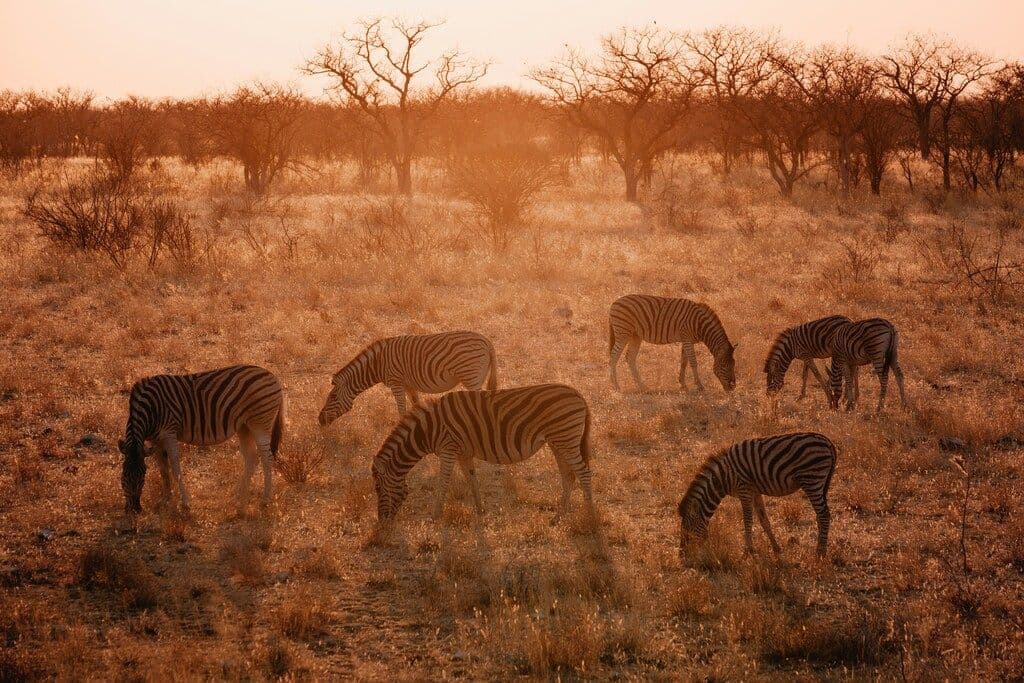
Etosha National Park
Etosha is one of Africa's great wildlife sanctuaries, built around a vast saline pan — the Etosha Pan — that dominates the centre of the park. The pan, visible from space, covers approximately 4,800 km² and during the dry season attracts extraordinary concentrations of wildlife to its mineral-rich waters. The park was declared a game reserve in 1907 and is today home to 114 mammal species, 340 bird species and 110 reptile species.
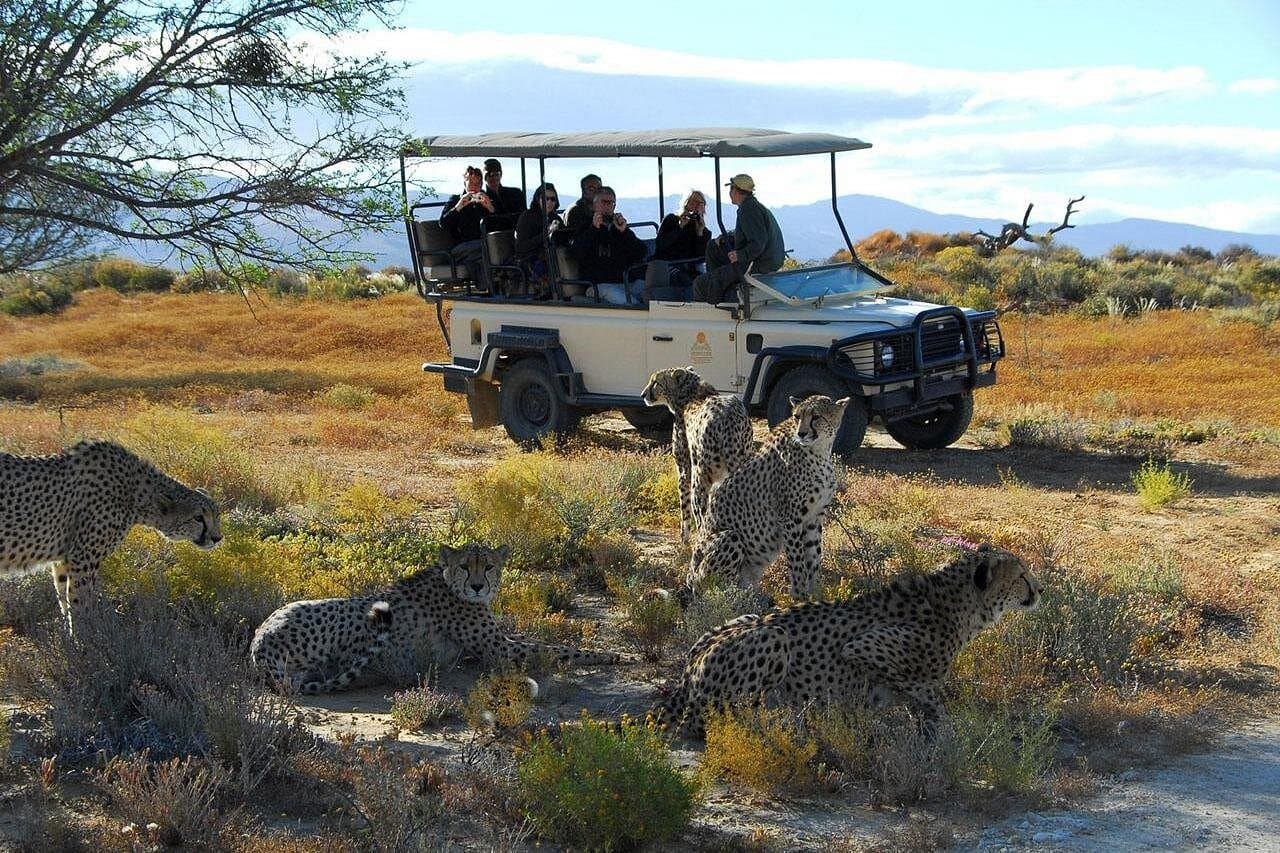
Damaraland
Damaraland is a vast semi-arid region in northwestern Namibia characterised by dramatic rocky landscapes, ancient rock engravings and remarkable desert-adapted wildlife. The Huab, Ugab and Aba-Huab river valleys sustain populations of desert-adapted elephant and black rhino — animals that have evolved to survive in conditions far more arid than their counterparts in wetter regions. The Twyfelfontein rock engravings, a UNESCO World Heritage Site, contain over 2,500 petroglyphs dating back thousands of years.
Skeleton Coast
The Skeleton Coast National Park protects a 500 km stretch of Namibia's dramatic Atlantic coastline, from the Ugab River in the south to the Kunene River on the Angolan border. The northern section is accessible only by permit and fly-in operations. The coastline takes its name from the bleached whale bones left by the 19th-century whaling industry, and from the shipwrecks — more than 1,000 — that litter the fog-shrouded shore. Cape fur seals (over 100,000 individuals at the Cape Cross colony) attract lions and brown hyenas to the coast.
Self-Drive Safaris in Namibia
Namibia is the only African country where self-drive safari is genuinely the preferred option for many visitors.
Roads within Etosha National Park are well-maintained gravel and accessible by standard 2WD vehicle. The B1 and C-routes connecting Windhoek to Etosha are sealed and in good condition.
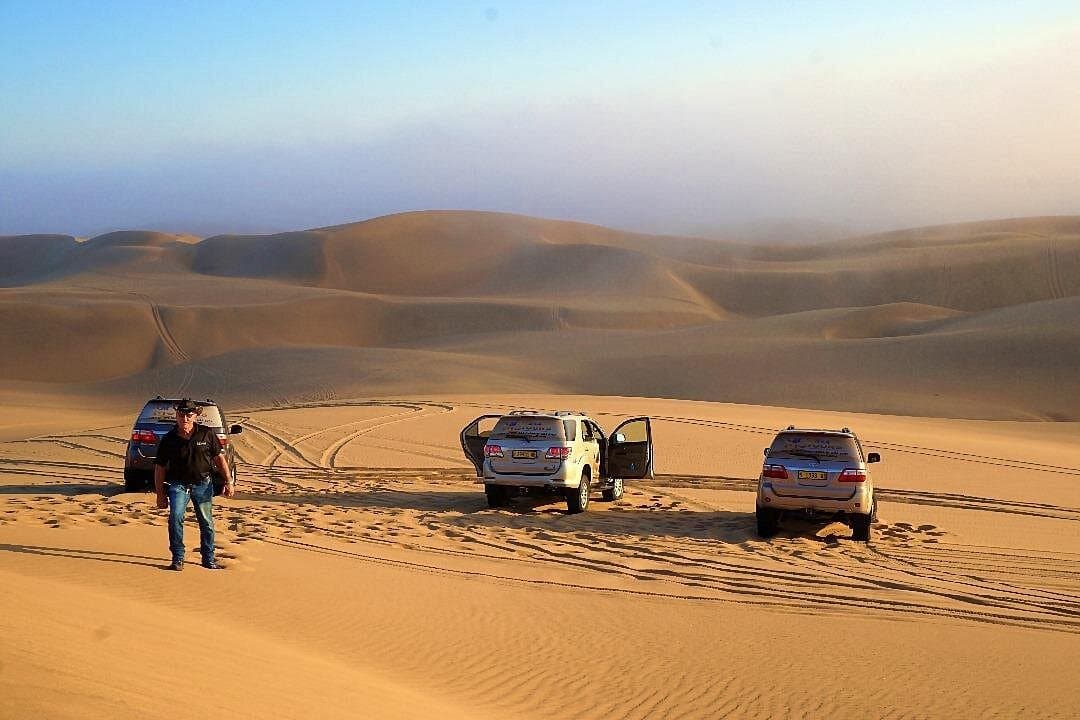
Damaraland and the Skeleton Coast require a 4WD with high clearance due to river crossings and remote tracks. Distances between fuel stops can exceed 200 km — carry sufficient fuel and water.
Namibia drives on the left-hand side of the road. A valid international driving permit is required for most foreign licence holders.
Best Time for Namibia — Tournament Season
Typical Safari Costs in Namibia
Prices in USD, per person sharing, per night. Verified against Safari.com live lodge prices (2025/26).
| Safari Type | Rate (pps/night) | Typically Includes |
|---|---|---|
| Windhoek city hotel (pre-safari) | $150–$300 pps/night | Room only or B&B, airport transfers |
| Etosha NWR budget camp (self-catering) | $80–$190 pps/night | Self-catering chalet, park entry fees |
| Etosha mid-range lodge (e.g. Strand, Mushara) | $240–$430 pps/night | B&B or DBB, some game drives |
| Etosha premium lodge (e.g. Onguma, Ongava) | $485–$865 pps/night | All meals, twice-daily game drives, activities |
| Sossusvlei / NamibRand luxury (e.g. &Beyond, Wolwedans) | $865–$1,190 pps/night | All-inclusive, guided dune walks, scenic flights |